
Wasting time
When you ask somebody how they are, one of the standard cliché answers is: busy.
And I know the cashier from my grocery run the other day isn’t particularly happy about this way of being either. She was venting about how people don’t seem to have any time anymore. Even on a Sunday, people are rushing in for breakfast groceries, always having somewhere to be. Behind her apparent judgement, you could feel the concern seeping through though. Just genuinely worried for the state people live in. For all of us.
I felt like I got tapped on the fingers like a little kid. Because she has a good point, doesn't she?
We've forgotten how to do nothing
How is it that even on this communal rest-day, we're still busy? There is always so much to do or so many possibilities to expierence.
(Even more and more stores open their doors on Sunday - which is insane to me that people have to work more for us to consume more, but that’s a rant for another time).
Yet somehow it feels like wasting time has become the real luxury.
I feel it myself: that quiet disappointment when free days fill up with to-do's and social obligations. That's not exactly what life is about to me.
It's time without a plan that holds the purpose. Just embracing your surroundings. Getting lost in your own world without a timetable screaming your name. (And no, mindlessly scrolling doesn't count).
It seems like humans have almost forgotten what that feels like to simply be unproductive.
But what if unproductivity is actually the most productive thing we can do?
© Cosmos
Your brain's secret life
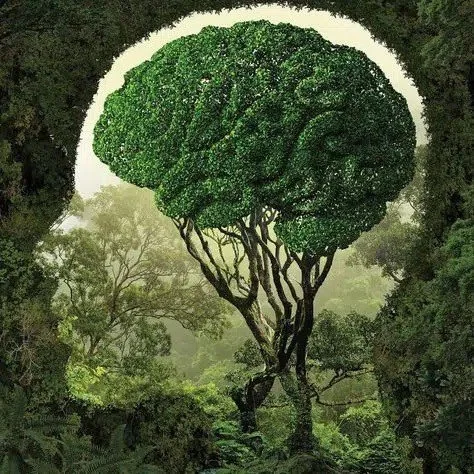
There's a neurological reason why doing nothing feels so good when we let ourselves. The parts of our brain responsible for mind-wandering have a name: the Default Mode Network. And it only lights up when we stop doing everything else — when we're not focused on a task, a screen, a deadline.
But here's what's wild: the DMN isn't passive. While you think you're doing nothing, your brain is quietly doing some of its most important work. It consolidates memories, processes emotions, builds empathy. And perhaps the most crazy part, it makes unexpected connections between ideas that have nothing to do with each other on the surface. That sudden insight in the shower? The solution that came to you on a walk? That's your DMN, doing its thing the moment you stopped forcing it.
We've built a society where we fear boredom. But in trying to avoid it, we miss out on everything it quietly offers.
And over time, a brain that never gets to rest starts to show it — there's growing evidence that a chronically disrupted DMN is linked to anxiety, depression, and burnout.
The brain needs its downtime the way the body needs sleep.
Even ants clock off
We're not the only ones who need this. Most animals spend most of their time doing absolutely nothing at all — and it's not laziness, in their case it's survival.
Behavioural ecologist Professor Dan Charbonneau found that in a colony of ants — do you know any animal that seems busier? — almost half of them are simply standing around at any given moment. Not lazy. Just resting. Waiting. Being. An energy-saving strategy that's kept them going.
And even the king of the jungle, the lion, sleeps 16 hours per day to conserve energy for those explosive hunting moments.
Seems clever and frankly feels like an invitation to do the same. No?
Want to waste time together?
I’m going to try to actively incorporate waste time blocks in my calendar. Maybe it won’t be a grand thing every day, but apparently the DMN activates almost immediately - within seconds - so that seems doable. (Imagine if it needed a day to reset - humans would be doomed).
Here a 5 ways to let your mind wander more
No surprise here, but nature turns out to be one of the most reliable ways to activate the DMN. Not because it's calming (though it is), but because it asks almost nothing of your focused attention. A rustling tree, a passing cloud, the sound of water — these things hold your gaze just enough to let the rest of your mind go loose.
Here are a few ways to start:
Lunchbreak outside. At lunch time go outside for 5 min, every day. Just stand & breathe with feet firmly on the ground. Feel the wind on your face, the soil beneath your feet. An easy doable daily recalibration.
Sit with one thing. Go outside and pick something to watch — a plant, a bird, a patch of sky. Don't study it. Just be with it for ten minutes. This is what somatic therapists call orienting — your nervous system scanning the environment not for threats, but simply for what's here.
Walk without a destination. Leave your phone at home. No podcast, no music. Walk slowly and let your eyes go where they want. Notice what pulls your attention — a colour, a sound, a shape.
Lie down outside & daydream. Not to sunbathe, not to read. Just lie down and look up. Clouds, treetops, open sky. The sky has a way of making you feel free, of expanding. Let thoughts come and go. Five minutes counts.
Slow doodling: No thinking - take a piece of paper and a pen and just draw simple, repetitive patterns. Like drawing a continuous spiral or a circle. This way the brain can enter a relaxed, "no-mind" state. A meditative-like break similar to daydreaming.
We would love to do this together.
Will you let us know how it goes?
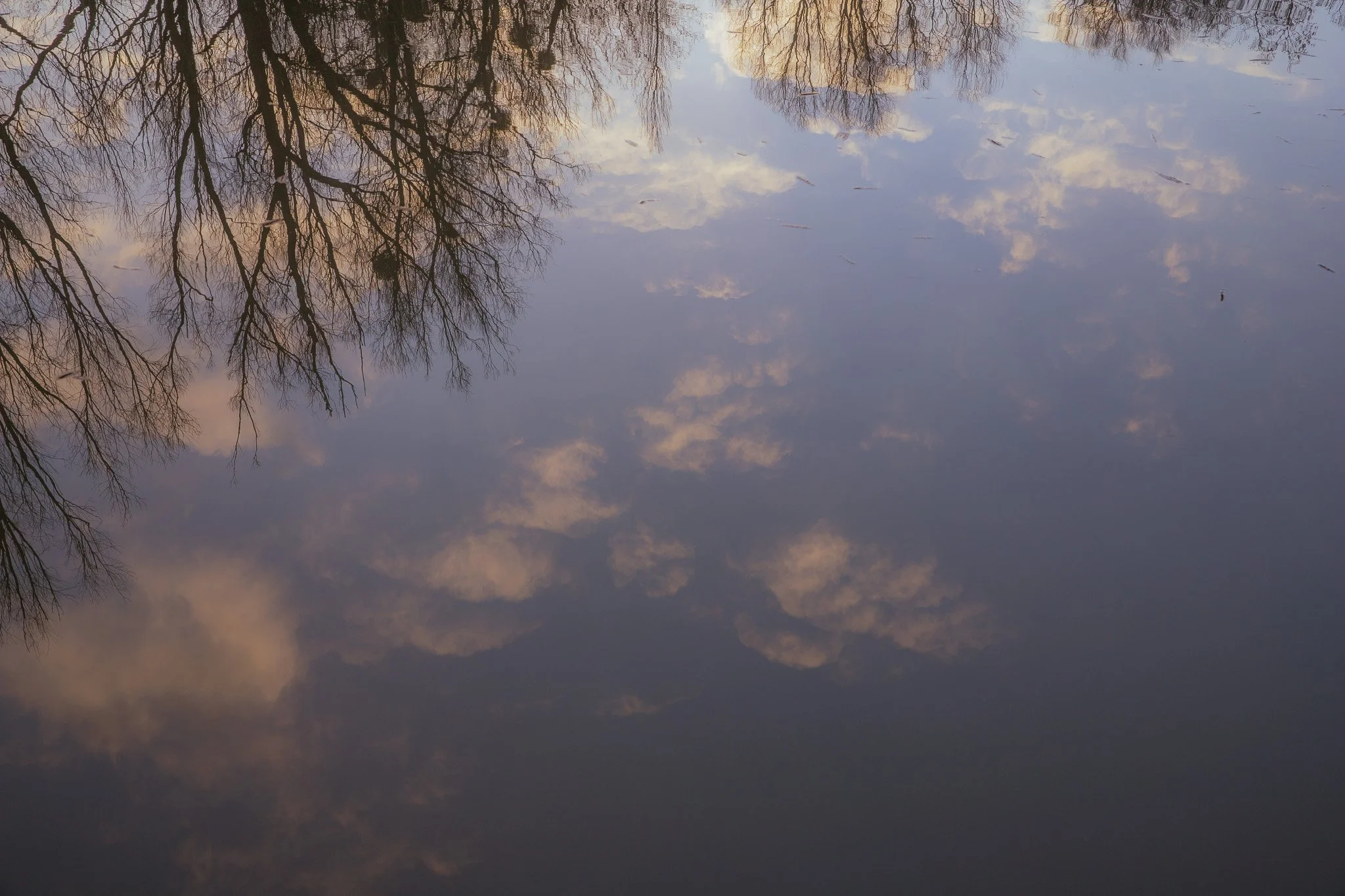
The reflection of clouds in the water